Agricultural Background
Over time, the bay's importance extended beyond maritime pursuits. The fertile lands surrounding the bay supported agriculture, with crops like cranberries becoming a significant part of the local economy. The establishment of the Ocean Spray cooperative further solidified Cotuit's role as an agricultural center.
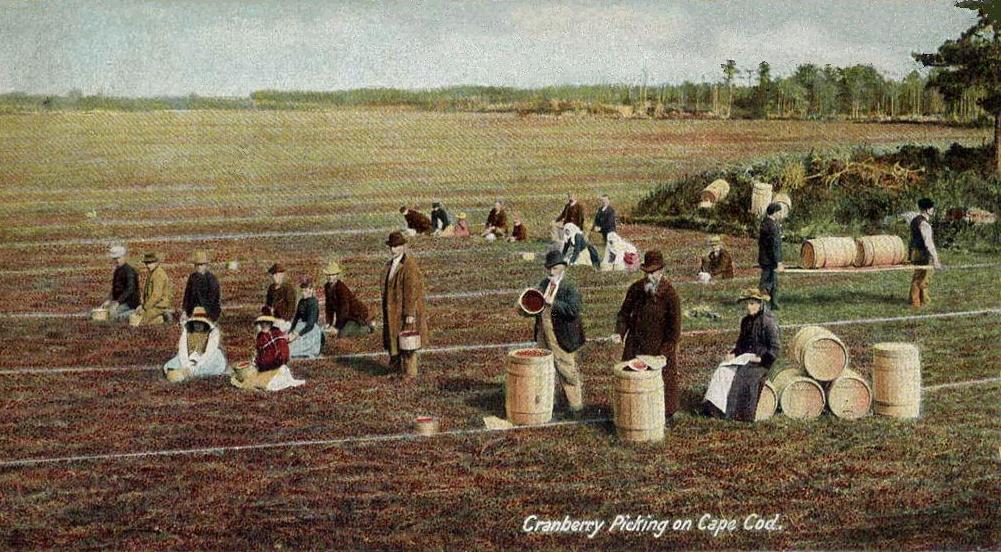

Waterfront villages were also farm communities.
Cape Cod is often pictured through beaches, boats, and summer porches, but its village economies also depended on fields, livestock, gardens, orchards, salt hay, and bogs. Cotuit Bay sat inside a working landscape where families balanced water-based labor with land-based production.
Cranberries became one of the Cape's signature crops because the region offered acidic soils, wetland edges, sandy uplands, and a climate suited to the fruit. Bog work was seasonal and demanding, but it connected small local operations to a wider regional market.


The cooperative market changed the scale.

Ocean Spray matters to the broader Cape story because cooperatives gave growers a way to pool harvests, stabilize marketing, and reach buyers well beyond the Cape. For a place like Cotuit, agriculture was not only local self-sufficiency. It was part of a larger New England food economy.
The agricultural story also sits beside the environmental story. Productive land and clean water are linked. Bogs, wetlands, streams, and bays all need careful management, and that balance became more important as the Cape shifted toward recreation, housing, and tourism.